19 February, 2019

I am a Google Developers Expert!!!


This article was originally published on Linked In.

Usually, I do not use multiple exclamatory marks to express emotions. Today is an exception!

Just when I was wondering what should be the first blog post for 2019, I realized I completed 10 years in blogging. I created the blog 'Curious Tester' on 6th February 2009. 10 years later, I have written more than 250 articles on my blog, plus another 50+ external publications on corporate blogs across the world. I am losing count! What a journey it has been! I thank all the readers who have encouraged my writing for this long. BUT... today is special for another reason - where my writing journey led me to...


I am super thrilled to share I am a Google Developers Expert in Interaction Design. I have been active in the Google Bangalore Community for a couple years although sporadically. I never expected that one of the evangelists who followed my work, would recommend my name to this program. After clearing five rounds, here I am, recognized for my work in Interaction Design.

In the past five years or so, Interaction Design has become the soul of my work. Thanks to the strong foundation created by Donald M. Norman, David Rose, Dan Saffer, Golden Krishna, Luke Wroblewski, Alan M. Cooper and Steve Krug, I started my Usability journey in 2009 at a startup that was building remote automation projects. While usability was not a quality criteria, I learned *something* was wrong with *some* features and started to read Steve Krug's book, 'Don't Make Me Think'. This led me to talk to few users (B2B though), which in turn led to finding usability problems and thus began my interesting journey in UX (just usability at the time).

This new interest in usability continued in my next startup where my mentor Pradeep Soundararajan noticed a spark and nurtured it. It was in this role that I ran multiple usability and user research projects for many Indian and US based startups. The next role took me to setting up a dedicated UX Competency Center from scratch, where I executed and led multiple projects leading to happy customers. Here I was, learning about usability, user research and user experience on weekends and implementing my learnings at work on weekdays. I was fortunate to attend the first design course led my Donald Norman (was it Udacity or Udemy, I don't remember), followed with reading many books by UX giants I mentioned above. Last year, I also completed my specialization course in Interaction Design (University of California San Diego). Again, I was fortunate, as this course was led by Scott Klemmer, a student of Donald M. Norman. An year later, this is where I stand. I cannot believe most of what has happened since the time I started a blog back in February 2009. But I do believe in this:

"When you want something, all the universe conspires in helping you to achieve it."
Paulo Coelho
Many people make an impact on our lives. My heartfelt thanks to my mentor Pradeep Soundararajan for inspiring me ever since I wrote my first blog and for being a major part of my learning journey. Thank You Pradeep, for gifting your precious time to me!

Many organizations make an impact too. All my employers played a great role in my work. Amadeus, my current employer has been very supportive of my work. I am amazed every time I think about how the organization has grown from 2 people to 2000+ in roughly 6 years and continues to nurture great talent in the technology space. This is possible thanks to the fabulous leadership team and the talented people working here. I am happy to be a small part of it, shaping the future of travel for future generations to come. Thank You, Amadeus. You humble me!

My super lovely team at Amadeus created this lovely poster for me. I am extremely grateful for the amazing support and love I have received so far, throughout my User Experience journey.


I can't thank enough - all the simple people I have met, interacted with, worked with, inspired by, challenged by and impacted by. There are hundreds and thousands of colleagues, mentors, leaders and Dronacharyas who inspire me to do better each day. Special thanks to my chaddi buddies (they know who they are) for always being there for me.

"If I have seen further than others, it is by standing upon the shoulders of giants."
Isaac Newton
A Big Thank You from to each one of you who has touched my work and my life in some way.

Here's Wishing You All a Great 2019!


15 October, 2018

We Don't Need Mobile Apps. Do We?


A product evangelist I recently spoke to, as part of a technology forum asked, “Why do we need mobile apps?” At first, I got into an argument on how the mobile apps are changing the world. Changing the world – yes to some extent. But are mobile apps REALLY changing the world? Am I saying that creating another billion mobile apps will wash out out poverty, reduce crime, provide reasonable healthcare to senior citizens or other valuable benefits to the society? May be not. I kept wondering about this for next couple of days.

This article is not a justification to the million dollar question, “Why do we need mobile apps?” This is a view of how I think mobile apps can impact the world in its own way.

We need mobile apps for three reasons if not more:

  1. People are mobile and expect products to be accessible on the move
  2. Mobile app is another new channel
  3. Mobile app is a strong touchpoint in customer experience

Let us look at each one in detail.


People are mobile and expect products to be accessible on the move


According to a study done by Statista in 2018, the number of mobile phone users in the world is expected to pass the five billion mark by 2019. In 2016, an estimated 62.9 percent of the population worldwide already owned a mobile phone. The mobile phone penetration is forecasted to grow, rounding up to 67 percent by 2019. China was predicted to have just over 1.4 billion mobile connections in 2017, while India was forecast to reach over one billion. By 2019, China is expected to reach almost 1.5 billion mobile connections and India almost 1.1 billion. 

Most of the mobile market growth is attributed to the increasing popularity of smartphones. The users are all over the smartphones. So where should the products be?


The products better be on the smart phones.

Consider Oracle, SAP and other enterprise giants. Each one has built a mobile offering in the past 10 years for better outreach to their customers and users.


Mobile app is another new channel

A channel is the medium of interaction between a customer and an organization. Mobile app is a key channel in today’s world.


Each organization has its own set of relevant channels built over a period of time. Some prefer brick and mortar stores, while others are on the internet. Even on the internet, organizations are faced with the question of whether they must just have a a website or a mobile app, live chat support, chatbot or some latest technology offering. Take the example of Pepsi soft drink. Users can buy it from supermarkets, retail stores, order it from online marketplaces or vending machines placed in public places. Now, Pepsi might be faced with the challenge of adding a mobile app as an additional channel to users. Just adding a mobile app offering may not increase the sales right away, but it does become a new channel to users using mobile apps.

Note that adding a mobile app may or may not generate revenues in many industries. It is up to the organization to decide if adding a mobile app works well with the overall product strategy and if it can impact long term sales and revenues in a positive way.

Some organizations may even create their own unique channels to support their business. For example, Amazon’s dash buttons are Wi-Fi connected physical devices that allow users to reorder a product from Amazon with one press. Take a look at the video HERE.


Mobile app is a strong touchpoint channel in customer experience

During a customer journey, a user may interact with an organization several times using different channels. Each of these interaction instances represents a touchpoint between the customer and the organization.


Customer touchpoint is the interface of a product or service with users before, during, and after a transaction. Touchpoints go a long way toward defining customer experience and an organization in general.


Consumer habits are changing to a mobile-first lifestyle. Everyone is a fingertip away. Take the example of airline travelers. 1 in 4 airline leisure passengers worldwide is mobile only. "Mobile only" passengers own smartphones and tablets, but not desktops/laptops. Given these insights, mobile app is a critical part of the customer touchpoint.

The users expect an omnichannel experience. Consider a simple traveler journey from flight shopping to the airport: Users search flights on the mobile app, continues flight booking process on the website, receives tickets over email, completes check-in on mobile app, receives boarding passes over email and mobile phone wallet, enquires about baggage allowance over chatbot (linked to the mobile app and/or website), asks specific questions using voice commands on the app, receives notifications about flight on the mobile app, books a taxi to the airport on the app and finally gets to the airport.

The above example is just one type of customer journey. Some users might book flights on the mobile app and perform other interactions on web/chatbot/email/toll free phone lines. The whole idea of plugging in the mobile app into the customer journey is not forceful in this context, rather the need of the hour because users *ARE MOBILE* most of the time.


What about Progressive Web Apps?


There is no denying that progressive web pages/apps, iOS app spotlight, Android app slices and other recent technologies are simplifying the complexities introduced by mobile apps (like download/install/uninstall hassle, offline availability etc). Having said that, one must note that newer technologies do not necessarily pre-empt older innovations all the time. Rather, some new technologies augment the value offered by older innovations and even take them to a higher level of value.


So, What's the Future for Mobile Apps

The future of mobile apps does not lie in adding to the existing trash pile of mobile apps in the market. The future lies in integrating mobile apps seamlessly into the daily lives so pervasively that they no longer need to be used by unlocking the phone, tapping on a few commands and waiting for them to respond. Take a look at this short video summarizing the work of the great David Rose.

The future I believe in does not rely on how many websites, mobile apps, chatbots or phone channels are stitched together to onboard more users and charge them.

The future I believe in makes technology SO HUMANE that we humans do not have to open a laptop to access a website, or unlock a mobile phone to access an app or put your mouth close to a hardware device and make orders.


The future I believe in works so seamlessly that it almost seems HUMAN without challenging me on my intellect, emotions or privacy.

Sadly, today, we have left ourselves far far behind!

Fortunately, we have some humane things happening around us. Stay tuned!

NOTE: I am talking about the future of mobile apps in my upcoming talk, "Enchanting Experiences - The Future of Mobile Apps" at Sydney. If you are in Sydney, then come say Hi at Test Bash Australia 2018. 

Is Sydney too far or too expensive? Take a look at an old version of this talk HERE

30 September, 2018

Is Your Personal Data Secure? - A Beginner's Guide to GDPR


Are you an individual who worries about your personal data while transacting online?

Are you an organization doing business? Do you think about protecting your customer’s personal data? If not, are you ready to pay fines up to 4% of annual global turnover or more?


Users personal data is in danger. Organizations handling data are in danger. Neither of them knows what is the right way to process and protect this personal data. This article is an attempt to educate you about what GDPR is and how it impacts all of us as individuals and organizations.

Personal Data Security
Given the great technological advancements, globalization and complex flows of personal data, users are increasingly worried about the security of their personal data online. Today, keying in a phone number or email address might reveal users’ personal information at the click of a button, if this data falls in the hands of an irresponsible organization. Are not governments worried? Are there any laws and regulations to protect users? 

What is GDPR
The European Union's new General Data Protection Regulation (GDPR) came into effect on May 25, 2018. The GDPR will apply to organizations processing personal data in the EU and also to organizations outside of the EU who may be targeting, or offering goods and services to individuals within the EU. This regulation gives control to individuals over their data by letting them choose how their data is handled online. GDPR highlights how personal data is captured by organizations and documented, how it is processed and what changes are required to the systems, processing users' personal data to comply with GDPR requirements. 

What GDPR means to Individuals and Organizations
Individuals use many products - be it mobile apps or websites. GDPR expects organizations owning these products to notify users how their personal information is consumed within the products. Products working with third party partners must have a personal data policy and a privacy policy to ensure there is no threat to the data when it changes hands from one entity to another.

Basic Definitions
Personal Data
Any information related to a natural person, that can be used to directly or indirectly to identify the person is Personal Data. 
It can be anything from a name, a photo, an email address, bank details, posts on social networking websites, medical information, or a computer IP address.

Data processor
The entity processing on behalf of and in accordance with the instructions of a data controller. 

Data controller
The entity deciding the means and purpose of the processing of personal data. 

What will change?
Under the GDPR, the obligations on data controllers will substantially increase and, importantly, data processors will also now have data protection obligations. For example:


  1. Data controllers and processors alike will now be required to keep records of their processing. 
  2. Contracts with processors will need to be updated with new mandatory provisions. Privacy notices will need to be updated. 
  3. “Consent” will be more difficult to obtain and may need to be refreshed. 
  4. Principles of “privacy by design” mean that organisations must look at their processing and assess whether it is imperative. 


Privacy rules around the world are tightening. The GDPR is just one example of a regime change which aims to put the rights of the individual first. Many of the principles are similar in privacy regimes around the world, but the GDPR is often stricter. Although compliance with the GDPR will not guarantee compliance with all privacy regimes across the globe, it will help to reduce global risks.

16 September, 2018

The One Thumb, One Eyeball Test


Imaging that your user is on their phone, standing in the bus, surrounded by distractions and your app has to hold their attention. They must be able to use your product using an average thumb. If they can’t, you fail the One Thumb, One Eyeball test, and will lose users.

A woman using the mobile phone with one hand on a beach

Many mobile products have call to action buttons that are either too small, or placed too close together, or links are confusing, or new unwanted windows pop up. As soon as you redirect someone to a screen they didn’t want or expect, they’ll lift their head up and your product has lost. Users should be able to complete critical tasks quickly without losing focus. This means all the critical tasks are "do-able"using one thumb and one eyeball what come may - be it standing in the bus, leaning on to the wall at train station, sitting in a congested place at work, comfortably lying down on the couch or even better, sitting on the beach.

One Thumb, One Eyeball Test
People use mobile phones everywhere and anywhere. They are often distracted away from their mobile phones to get some work done or distracted by mobile phones to do some physical work without dropping the phone down. This forces them to use the mobile phone by investing only one eye and one thumb. This enables high speed interaction using one hand needing short attention spans.

The one thumb, one eyeball test was proposed by Luke W during the design of “Polar”, an app designed to create photo polls and allow voting on them. 


The objective was that a user should be able to create a new poll in less than a minute using only one thumb to do so. This test is now a global standard for mobile apps across the world.

Moving away from Hamburger to Tab bar design
Hamburger menu placed in top left corners of the app are too hard to access. Take a look:


A user who is driving a car needs to use the phone in one hand with the other hand on the steering wheel. If the app hamburger is in the top-left corner, the one thumb use case fails. In other words, users must be able to perform critical tasks on the mobile app with just one thumb in a few seconds. Lesser the time (in seconds), the better. Users work in micro-moments - small units of time with distracted attention. Hence the need for speed.

In the above app, notice that most of the critical tasks like My Flights, Today's Deals, Booking are easily accessible using one thumb. This is the freedom users need.

Takeaway
Effective mobile designs must accommodate for one eye and one thumb experiences.

If people can get things done in time sensitive, limited mobility situations, they'll be even more efficient and products will have their full attention.


02 April, 2018

The Big Three Questions .... and User Research


This article was originally published on Linked In.

So, Life happens. I took an unplanned break from writing for past few months. The good news: I am back :). Without further ado, let us get started. I'll touch upon my experience of doing user research over past few years in this article.

What is User Research
User Research is the process of understanding the *impact of design* on an audience with a focus on users’ behavior, needs, and motivation.

Why do we need User Research?


1. To create designs that are truly relevant to people

2. To create designs that are easy and pleasurable to use

3. To understand the return on investment (ROI) of your user experience (UX) design

What is Wrong with User Research
We humans think that we are driven by rationality. Yet, we are far from it. How we behave is based on the heuristics and biases we have. These, in turn, influence the decision we make and the problems we solve. This is precisely why conclusions from user research may not improve the experience of the product. It is not that user research methods are faulty. It is because what people say about their motivations and behavior is far from what motivates them to behave in a real environment. Hence, observations about them during interviews may not capture the whole story.

How to Fix it
Jeff Gothelf talks about The Big Three Research Questions in his book, The Lean UX.

1. Is there a need or opportunity? 
Identify a strong need or opportunity as this is critical to successful user research. This can be done through Observations and Interviews.

2. Do people value my proposed solution? 
Today, products suffer from feature bloats. Asking if the proposed solution for the identified need/opportunity is something people value. The value of the proposed solution can be measured using interviews. If people don't value the solution, there is no point building the solution. Just discard that need and move on to the next one.

3. Can people use my proposed solution? 
Building a solution without validating if people can use that solution is a waste of time and money. A good alternative is to build a simple prototype of the solution and watch people use it by performing usability testing and interviews.

The above research questions apply not just for user research, but for any problem you are trying to solve.

Next time around, when someone seeks user research, ask them what value are they looking for?


29 January, 2018

Flight Maps and Natural Mapping


This article was originally published on Linked In.
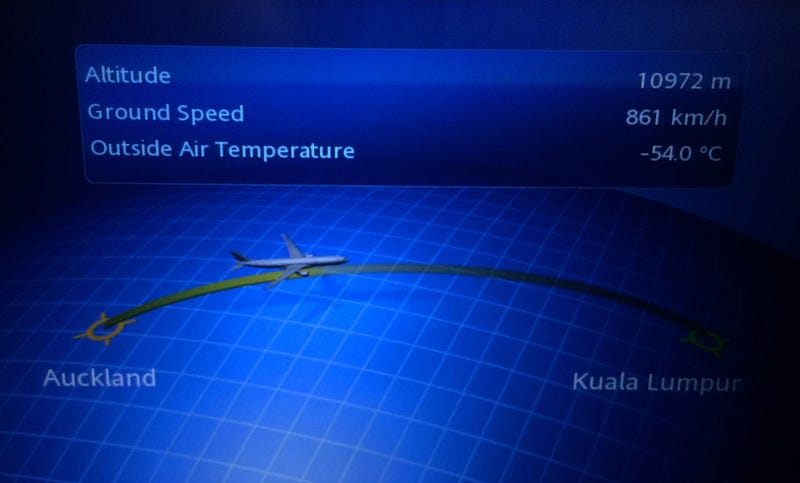
Interactive flight maps are a great way to kill time on long-haul flights. Few In-Flight Entertainment (IFE) systems get the geography wrong on these maps. Take a look at this one, I happened to be in last year.


On a standard world map, we know that Auckland is far far away from Kuala Lumpur to its right. On this map shown above, representation shows that Kuala Lumpur is to the right of Auckland, and the flight is flying from Auckland to Kuala Lumpur.
As you may notice, a natural mapping is missing on the interactive map since the location of Auckland and Kuala Lumpur are reversed.
Mapping is a technical term meaning the relationship between two things. Consider the steering wheel in a car. To turn the car to the right, one must turn the steering wheel clockwise, so that its top moves to the right. This mapping is easily learned and always remembered while changing directions of the car. In fact, turning the car to the right maps naturally with our right arm turning to the right, as a mental model. This is natural mapping, natural because it naturally maps to how humans use their body and mental models. The human mind is trained for natural mapping.
Natural mapping takes advantage of physical analogies and cultural standards (Another example — red traffic light means stop; green means go).
Great products apply natural mapping to design enchanted experiences.


    22 December, 2017

    Bibliography – Books I read in 2017


    This article was originally published on Linked In.

    On route to Sweden this year, I met an amazing 78-year-old young man (yes, you read it right. YOUNG!) who talked to me for over 5 hours on a 10-hour flight. We discussed oldest human civilizations, evolution, philosophy, culture, gender equality and what not. Couple hours into our conversation, I asked, ‘Sir, Have you read Jared Diamond’s book Guns, Germs, and Steel? It might interest you.’ He gave me a nerd look and said, ‘Parimala, what do you mean by asking if I read books. Of course, I read books. I am a professor emeritus at Lund University.’ I was baffled. Here, I was, murmuring about things I know, to a learned man who did not throw an air of attitude or ego around a less learned individual like me. Apparently, this wonderful man grew up amidst 3000 books at his home where books were his best friends for most of his childhood. He has another 3000 decorated beautifully in his home and reads about 75 books a year on average. He speaks about the origin of chilies, with the same ease as about a 3rd century BC Ganesh idol in Gudimallam.

    The Power of Reading


    The wise professor on the plane told me three things:

    1)     Your history knowledge is poor. You must read more (my friends know I read a lot and here was a man telling me to read more. I love it though)

    2)     You are such a poor listener. Listen.

    3)     Throw your phone in the garbage and focus on experiencing life

    Reading and Writing books do exactly the same things he said I was not good at. They enhance knowledge about our roots. They help us to listen better. They help us dump technology in exchange for a good time with books that transform us into a real wonderland with utmost easy.

    I read few books this year (broadly in two categories – technology and learning) and I’ll share few nuggets from some of them in this post.

    Technology

    The Enchanted Objects – David Rose

    David Rose is a gifted innovator of our times. He does not go about putting chips under the human skin or USB's in our heads. He humanizes technologies in ways I have not witnessed before. He worries about old people forgetting to take their medicine. He worries about people needing to remember right things at the right time. He dreams about augmenting human capabilities.

    His book Enchanted Objects aims to create enchanting experiences for people using technology without disrupting human feelings/emotions.

    My favorite quote: “I’m particularly interested in your willingness to flex and consider the world from three perspectives: technology, design, and business. It takes a polyglot to understand and make smart decisions about human-centered products, so your ability to understand and communicate with other scientists, engineers, designers, psychologists, executives, and entrepreneurs – as well as customers and users – is essential to taking part in the next wave of the Internet.”

    If you want to humanize technology, do yourself a favor and read this book.

    The User Experience Team of One – Leah Buley

    “Cut the crap, do what needs to be done.”, writes Leah Buley who has worked on many user experience projects as a one-woman army. In her view, many people make their way into user experience by crossing over from an adjacent field. These crossovers are the people who are carrying UX forward, taking it to new levels and new organizations.

    A quotable quote from the book: “Finishing a UX project is like sweeping a floor. You get the big pile easily, but those last few specks of dust are impossible to ever really clean up. You just keep cutting the dirt pile in half until finally you’re left with an acceptable amount of grime to put the broom away and get on with the next thing. Suffice it to say, the work is never really done.”

    If you are a UX team of one (which most UX folks are), this one is for you.

    Lean UX – Jeff Gothelf

    This book teaches you how to apply lean principles to improve the user experience. The book is so lean; you can read it in a couple of days.

    Few quotes from the book: “Best experience never gets built.” and “Test your riskiest assumptions first.”

    The Lean Startup – Eric Ries

    In my experience, it is the boring stuff that people do that lead to great things in the first place. I could not say it any better. “I have learned from both my own successes and failures and those of many others that it's the boring stuff that matters the most”, confesses Eric Ries.

    Another good quote: “The question at the heart of lean - which of our efforts are value-creating and which are wasteful?”

    Learning

    Free to Learn – Peter Gray

    Peter Gray is an American Psychologist who found that play was critical to raising happy and self-reliant children, who can grow up to become better students of life. To his son, the school was a prison, and he had done nothing to deserve imprisonment. This experience and the decisions he took thereafter to educate his son, became the basis for this book. He writes about hunter-gatherer communities and how children were educated using play. This is a necessary read for every parent, educator, and mentor who teachers, mentors, inspires or guides people.

    A noteworthy quote from the book: “Free play is nature's means of teaching children that they are not helpless. In a play, away from adults, children really do have control and can practice asserting it. In free play, children learn to make their own decisions, solve their own problems, create and abide by rules, and get along with others as equals rather than as obedient or rebellious subordinates. None of these lessons can be taught through verbal means; they can be learned only through experience, which free play provides.”

    When Breath Becomes Air – Paul Kalanithi

    Paul Sudhir Arul Kalanithi was an Indian-American neurosurgeon and writer. His book When Breath Becomes Air is a memoir about his life and illness battling stage IV metastatic lung cancer. Death is a white elephant in the room. It is so certain, yet we live our lives thinking it is never going to hit us. Paul documents his life as he approaches death and how his wife Lucy (the couple was heading for a divorce before Paul was diagnosed with cancer) stood by him after learning about his condition. They even chose to have a baby, Cady, knowing that the Paul might not be around in her growing up years. Cady did fill his last days with joy and a peaceful death. Paul, not once asks, ‘Why me?’ He handled this with such courage that Cady, Lucy and his entire family and everyone who knew him will learn from his courage.

    Paul’s note to Cady: “When you come to one of the many moments in life where you must give an account of yourself, provide a ledger of what you have been, and done, and meant to the world, do not, I pray, discount that you filled a dying man's days with a sated joy, a joy unknown to me in all my prior years, a joy that does not hunger for more and more but rests, satisfied. In this time, right now, that is an enormous thing.”

    A heart-wrenching, soul-stirring story of hope!

    The Dance of the Possible – Scott Berkun

    “We always have more freedom than we think, we just forget.”, says Scott Berkun. If you do not have the freedom to read his books or blogs, then just know that you forgot and do remind yourself. Scott is one of the consistently wonderful writers of our times. He wrote this short book about creativity.

     “We can learn three simple rules from our ancestors in this regard: 1. if there’s something you want to do, you must simply go and do it. 2. If you want to be better at something, do it more often. 3. If you want to improve faster, ask someone who knows more than you to watch you and give their advice.”

    “The shower is one of the few places left that we all must go where there are no advertisements, no news, no screens and no input for our minds. We relax, we sink back into the comfort of our bodies, and our brains slowly recover from everything we’ve asked them to do all day long.”

    What I like about Scott is that he does not claim to know everything. He makes an attempt to do so. If you think you are not creative enough, Scott will surely tell you, you are creative! How? Go read this book.

    The Dip – Seth Godin

    The Dip is an old classic from Seth Godin. Seth’s microblogs are good enough to inspire you to do good work. His books with classic examples and metaphors can push you to your limits.

    Favorite quote from the book: “The Dip is the long slog between starting and mastery. A long slog that's actually a shortcut, because it gets you where you want to go faster than any other path The Dip is the combination of bureaucracy and busy work you must deal with in order to get certified in scuba diving. The Dip is the difference between the easy "beginner" technique and the more useful "expert" approach in skiing or fashion design. The Dip is the long stretch between beginner's luck and real accomplishment. The Dip is the set of artificial screens set up to keep people like you out.”

    Another one: “But what if I fail? We all get to laugh at you.”

    The Good Night Stories for Rebel Girls - Elena Favilli and Francesca Cavallo

    This year, I started reading kids’ books thanks to my older kid. This book illustrates the tales of 100 extraordinary women from across the world spread across multiple centuries. These tales highlight the challenges that women faced, as back as 700 BC and how they fought through it.

    Few notable quotes from women across generations:

    "You hold all life's possibilities in the palm of your hands" - Fado Dayib's mother

    The stars are not very different from us: they are born, they grow old, they die - Margherita Hack

    "If it's a good idea, go ahead and do it" - Grace Hopper

    The time is now - Wangari Maathai

    I, for one, am proud of this book.

    With this, blogging for 2017 comes to an end and it shall begin in the new year.

    Happy Holidays and Happy New Year 2018!


    12 December, 2017

    Oredev Developer Conference 2017 - A Speaker Report

    This article was originally published on Linked In

    Øredev Developer Conference is one of the premier developer conferences in Europe. Well-known for their passion for conferencing, special care-taking of speakers and keynote-level topics. I had first heard about Øredev in 2013. At the time, I dreamt of being at the conference someday, but I never imagined being a speaker. This was the first time I submitted a 1-hour talk to Øredev and voila, my talk was selected for the conference.

    Conference Topics

    Even before I started to prepare for my talk, I got a chance to look at previous years’ recordings of the conference. Very few conferences bring the variety that Øredev brings – be it Product Management, User Experience, Development, Testing, Quality Assurance, DevOps, People Leadership and so forth. The conference also attracts keynoters from top universities across the world working in areas like AI, AR, VR, Mobile, Conversational UI, Bots and many others. Speakers in these areas are mostly practitioners working full-time and presenting their life’s work. Some of these speakers come with a backing of 30 years of professional work. Wow!

    My Talk

    My talk was on How to Design Intuitive Mobile Apps using Machine Input. I am studying about machine input for 2 years now. I believe that our generation and the ones coming after us do not need the next big website, next cool mobile app or the next sexy bot working for us. I believe that we need products that augment our capabilities and make us better, not the ones who make us feel like shit or in other words, less human.


    A bunch of innovators like Dan Saffer, Golden Krishna and David Rose strengthened my beliefs through their wonderful books. It has taken me forever to study the complete works of these great men. Nevertheless, each learning day has been fruitful. I also wrote about it HERE in early 2017. Over time, my interest only grew and hence the idea for a talk was born. If you want to know more about my talk, the kind folks at Øredev have recorded my talk. You can watch it HERE.

    Sessions I loved

    The Real, the Virtual, and the Cortex - Noah Falstein

    Noah talked about VR, AR and Mixed Reality and its life-altering realities. He touched upon neuroscience, talked about how these technologies have enhanced our lives and put us under threat. Often, at conferences, I meet people who want to stitch a chip into kid’s bodies so we could track them when they are at school or other gory stories of how cyborgs can raise the quality of human life.


    People like Noah give me hope that we do not want to build invasive products that creep into our bodies, that we need to have empathy, that our communications have to be humane. I just loved the humane touch he gave to his talk. You can find Noah’s talk HERE.

    Software & storytelling, programming & play – Linda Liukas

    Linda is a great storyteller who teaches programming to kids, girls, young women (and others too) using innovative approaches. Her primary audience includes 6-year-olds on average. For a change, she had an audience with average ages of 25 – 30 years at Øredev where she keynoted.


    Before the conference, when I looked up her work, Linda came across as this little charismatic girl, always smiling, doing what she loves and working with the most awesome generation one ever can – young kids. It was good to learn about her. My takeaways from her talk included the metaphors/analogies that little kids can understand and key principles around teaching and learning. Linda is a breath of fresh air! You can watch her talk HERE

    What is AI? Can computers become intelligent through playing games? – Julian Togelius

    Julian is an Associate Professor at New York University. He showed several case studies of games and how computers could become intelligent using gaming patterns with live demos of some of the old games he has studied. His emphasis lay on AI and how videos games can help augment AI. Again, his talk demonstrated the deep work done in AI for several years.

    Writing Apps for Mars – Kurt Leucht

    Kurt’s talk could have touched many a developer’s ego. He asked one fundamental question, ‘Developers take pride in the products they build. But do they know how those products perform in the real environment?’ He went on to give an example of onboard software for Mars rover (Oh! By the way, Kurt works for NASA. Ahem!) and show the differences between a good mobile app and a business app that serves a mission-critical need. A fabulous talk for mobile enthusiasts to focus on the purpose of building apps. Kurt’s talk is HERE if you are curious.

    Conversational UIs: Talking to Siri, Alexa, and Your Web Browser – Scott Davis

    Scott was a high-energy person who gave a fabulous talk on bringing Siri, Alex and web browsers together. His talk had real-life examples of how his daughter who cannot speak clearly types data, asks Siri to read it for her, while Alexa listens to Siri and executes the commands. This is the kind of technology we need to create – to augment the abilities of differently abled people of our times and upcoming generations. I felt great hope for the future. Scott’s talk can be watched HERE.

    Key takeaways

    Øredev is a conference with ~1300 attendees and 100+ speakers. It is not humanly possible to attend all sessions. I watched many of them after the conference. It was fun. You too can watch the Øredev talk videos HERE.

    I loved the talks around Conversational UIs, Bots, Virtual Reality concepts, Leadership and Product management talks. I was happy to learn (repeatedly) that there are humans who are concerned about fellow humans and not super gaga about plugging USBs into people’s heads or integrated chips into people's bodies. Linda Liukas’s teaching techniques were the biggest takeaway as I am looking up to designing my own tutorials next year. If you want to do just one thing after reading this, watch Linda’s talk for me.

    Until next Øredev, Aloha!

    24 October, 2017

    Who do you want your customer to become?


    Customer is King


    Thinking about the customer is a high-risk innovation type. Customers' needs and desires keep changing, which adds to the risk. Inspiring customers to behave in a new way is something very few organizations are thinking about.

    Defining New Behavior
    Steve Jobs' Apple designed touchscreen interface which inspired customers to behave differently. Henry Ford never thought about motivating horses to run faster. Instead, he built cars. Elon Musk didn't continue Henry's tradition. He is working on promoting faster travel through Hyperloop and supporting space tourism. Google is going a step further, building driverless cars. These products augment human abilities and improve their well-being in better ways.

    Things get interesting when specially-abled people start to use such innovative technology. For example, a blind person using a cane could use google maps to guide her to the destination. Countries like Japan can entrust driverless cars for octogenarians who continue to drive and cause accidents. There are innumerable opportunities.

    Drones
    Drones were discounted as toys in the early days. Today, they are used in photography in extreme conditions of climatic disasters, war scenarios, spying, products delivery and for many other purposes. A typical drone looks like a toy with a remote control, needs zero learning and is ready to fly as soon as you unpack it.

    Drones discovered new customer behavior.

    Hotel Bookings
    Travelers want to book hotels in advance because when prices are cheaper. But, they are intimidated to make a payment in advance. If they are not sure to make it to the hotel, they would like to avoid refund hassles. They prefer paying on the day of their check-in. In many cases, travelers would like to cancel the booking. Since they didn't pay earlier, they are happy to cancel without spending a penny. Maybe, they are okay with a small cancellation fee, occasionally.

    Booking.com re-defined customer behavior in many ways:
    Travelers can book the hotel in advance without making payment. Travelers can cancel the hotel with Zero cancellation fee. Hotels with cancellation and non-cancellation policies are highlighted, directly encouraging travelers to book the hotels with free cancellation facilities. Highlight cancellation dates and how much cancellation fee applies after due date. Free cancellation feature encourages many tourists and business travelers to book hotels on booking.com for visa purposes if some countries have trouble issuing invitation letters to them.

    Booking.com discovered new customer behavior.

    Innovate with the Customer in Mind
    Organizations / People looking to innovate with the customer in mind must spot unique change or trend in customer behavior

    Steps involved in Customer Innovation

    1. Discovery of a new customer behavior
    2. Creating a new type of customer based on the behavior
    3. Creating a new market


    This is a high-risk innovation which takes a long time to become disruptive. If done right, this innovation can re-define future of products and services.

    Think Uber, Airbnb, SpaceX!

    How do you innovate?


    09 October, 2017

    What's the burning problem you want to solve?

    The App Story


    Want to order books? There's an app for that.

    Want to rent furniture? There's an app for that.

    Want to make mobile payments? There's an app for that.

    Want to tweet while you drive the car? There's an app for that! Remember Tesla? Tesla loves you so much that it supports social media buttons on the car interface

    Want to talk to your driver? There's an app for that. Remember Uber? They care so much for your safety that they encourage drivers to chat with you as they drive.

    Want to keep the baby busy? There's an app for that too!


    The Bot Story

    Want to get to the call center analyst faster? There's a bot for that.

    Want to converse with an e-commerce company? There's a bot for that. 

    The patient wants to talk to the nurse? There's a bot for that too!


    What's the burning problem you want to solve?

    The world has many problems to be solved. Only few are worth solving. When we think of building a website, an app, a bot or even a robot, we need to ask ourselves three fundamental questions: 

    1. Is this a problem that many others have?

    2. Is this problem serious enough and worth solving?

    3. How often does this problem occur?


    How severe is the problem?

    Mosquito Bite Problem
    Is the problem similar to a mosquito bite? There are mosquitoes, and they do bite people. But doing nothing is a viable option. In few cases, mosquito bites may lead to serious diseases, but those are rare cases in rare places. But, that's only rare. Fixing moquito bites is a 'Nice to Have'. Is this serious enough? May be not!

    Shark Bite Problem
    Is this problem critical enough that many customers are trying to solve? Are they panicking that they are late to the market? Are they looking at competitors? Are they feeling as if a giant shark is going to eat them up. This is a Shark Bite problem.


    "Feature should be a Shark Bite Problem on a Mosquito Scale" ~ Omar Mohout

    Products or features must be built based on the seriousness of problems that occur at high frequencies. If we don't solve shark bite problems on mosquito scale, customers move to greener pastures in due course of time.

    We live amidst an ocean of websites, apps, bots, robots and what not! Quote the problem and there you are - someone tells you about an innovative app or bot that solves your problem. We believe in a future of screens, smartphones, tablets, and laptops. We believe in a future where every possible technology is stitched into our brain, skin, flesh and appears to work for us. We believe in a world of interfaces. Some problems may go away with interfaces, but most of them can be solved only with meaningful solutions. So, what is the burning problem you want to solve?

    Inventor and M.I.T. Media Lab researcher David Rose picks interesting problems and solves them. Take a look.


    David or the Screen Guy?